

Table Of Content
How Much Does a Foundation Cost Per Square Foot in 2026?
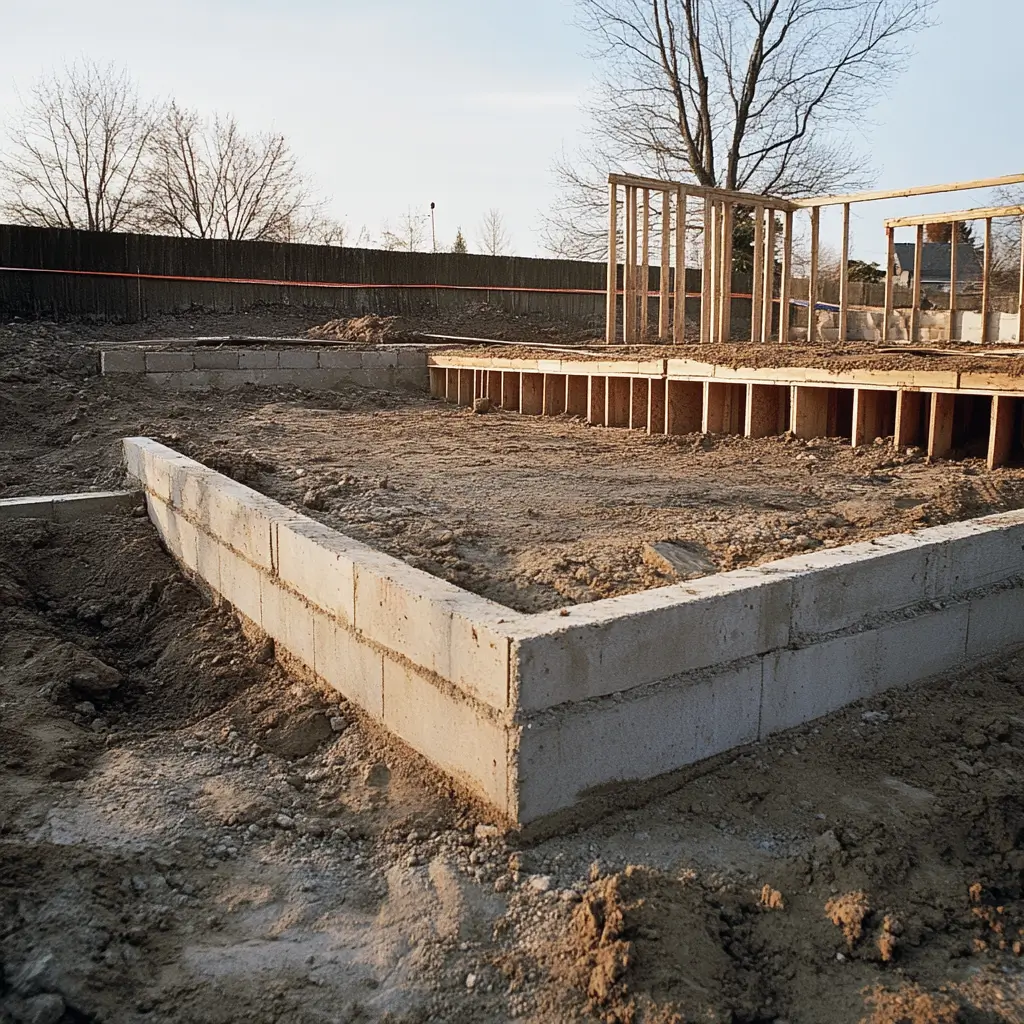
A foundation costs $5 to $50 per square foot in 2026, depending on the type, with most 2,000-square-foot homes paying between $10,000 and $100,000 total for the foundation alone.
That range is wide because “foundation” isn’t one product — it’s five or six very different construction methods, each with its own excavation depth, material volume, and labor demand. Before you can estimate the cost of a foundation accurately, you need to know which type you’re actually pricing. That decision usually gets made long before a shovel touches dirt, often during the broader planning for the cost to build a house in 2026.
Quick Cost Snapshot By Foundation Type
| Foundation Type | Cost per Sq Ft | Total Cost (2,000 sq ft) |
| Monolithic slab | $5 – $16 | $10,000 – $32,000 |
| Stem wall | $6 – $21 | $12,000 – $42,000 |
| Raft/mat | $6 – $12 | $12,000 – $24,000 |
| Crawl space | $6 – $18 | $12,000 – $36,000 |
| Pier & beam | $6 – $15 | $12,000 – $30,000 |
| Basement (unfinished) | $20 – $50 | $40,000 – $100,000 |
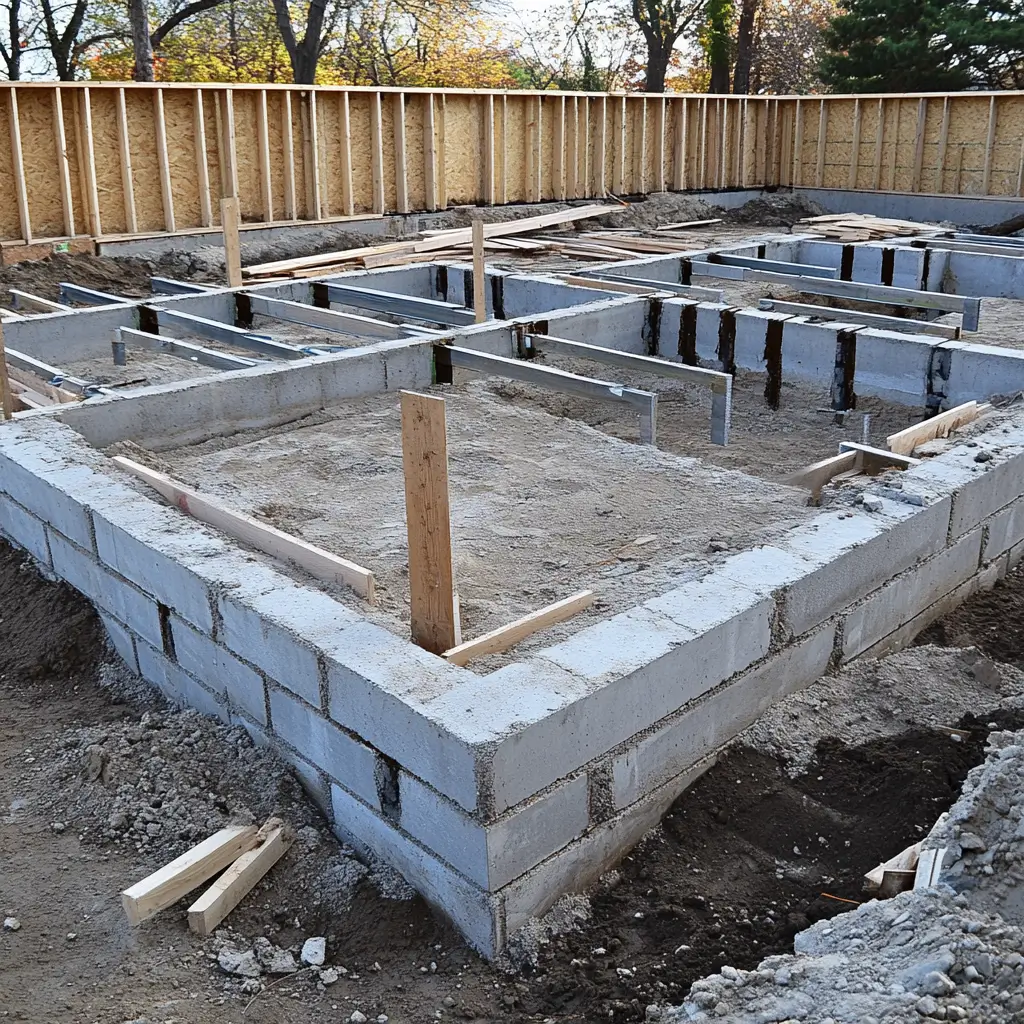
Foundation type is the single biggest cost driver here — 73% of new homes in 2024 were built on slabs, 17% on basements, and 9.2% on crawl spaces (NAHB/Census data). The right choice depends on your soil, climate, and lot. And that per-square-foot rate isn’t static — here’s how total cost shifts as house size goes up.
How Does Foundation Cost Scale by House Size?
Foundation costs scale roughly in proportion to square footage, but per-square-foot rates edge down slightly on larger homes. Why? Because excavation, permitting, and equipment mobilization costs are spread across more areas.
| House Size | Slab | Crawl Space | Basement (Unfinished) |
| 1,000 sq ft | $5,000 – $16,000 | $6,000 – $18,000 | $20,000 – $50,000 |
| 1,500 sq ft | $7,500 – $24,000 | $9,000 – $27,000 | $30,000 – $75,000 |
| 2,000 sq ft | $10,000 – $32,000 | $12,000 – $36,000 | $40,000 – $100,000 |
| 2,500 sq ft | $12,500 – $40,000 | $15,000 – $45,000 | $50,000 – $125,000 |
| 3,000 sq ft | $15,000 – $48,000 | $18,000 – $54,000 | $60,000 – $150,000 |
Note: Use this table as a starting point, not a final number — a 1,000 sq ft house on rocky or high-water-table soil can easily cost more per foot than a 3,000 sq ft house on flat, stable ground.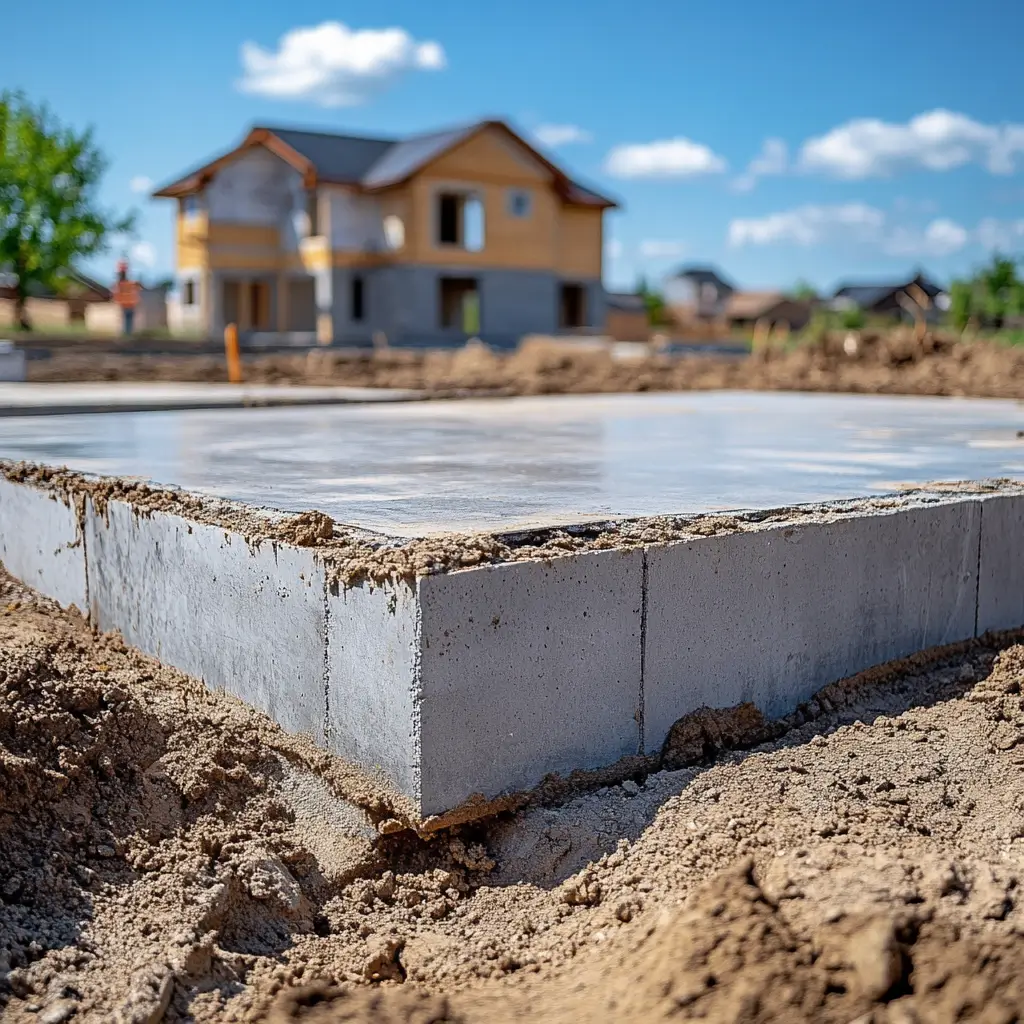
How Much Does Each Type of Foundation Cost?
Costs shift significantly depending on which foundation type you choose, so here’s a breakdown of pricing for each option.
● Monolithic Slab Foundation Cost
A monolithic slab foundation costs $5 to $16 per square foot. It is the least expensive foundation type for flat, stable lots. The savings come from pouring the footing and the floor slab in a single step, which cuts labor time and formwork compared to any foundation built in stages. It’s the default choice in warmer climates where there’s no frost line to build below.
One-Way Vs Two-Way Beam Slabs
A one-way beam slab supports the foundation on two edges, while a two-way beam slab supports all four edges for a more stable base under uneven loads. Two-way slabs cost slightly more but distribute weight more evenly, which matters on sites with variable soil bearing capacity.
Note: If you’re narrowing in specifically on slab estimates by thickness, mix design, and reinforcement, you must see the concrete slab cost per square foot breakdown to go deeper into those variables.
● Stem Wall Foundation Cost
A stem wall foundation costs $6 to $21 per square foot, running higher than a slab because it adds a perimeter wall and deeper footings.
A stem wall is a short, partially submerged wall around the home’s perimeter, and because each section can be poured to a different height, it’s the standard choice on sloped lots. It also allows the slab to sit high enough for gravity-fed septic lines, something a flat monolithic slab can’t accommodate.
● Raft or Mat Foundation Cost
A raft, or mat, foundation costs $6 to $12 per square foot before reinforcement, and it’s the standard fix when soil is too weak to support isolated footings.
Instead of concentrating the home’s weight on individual footings, a raft foundation spreads the entire load across one continuous slab reinforced with steel. Rebar adds another $1.40 to $4.00 per square foot, but on poor or inconsistent soil, it’s cheaper than the deep piers a slab or stem wall would otherwise require.
Budget-conscious projects sometimes swap in welded wire mesh instead of full rebar, which costs $0.15 to $0.25 per square foot — a lighter-duty option best reserved for smaller structures or secondary slabs rather than a full home’s structural raft.
● Crawl Space Foundation Cost
A crawl space foundation costs $6 to $18 per square foot, with the added cost coming from perimeter walls, vents, piers, and a required vapor barrier.
The payoff is easy access to plumbing, wiring, and ductwork without cutting into concrete for every repair. The tradeoff is moisture: an unencapsulated crawl space is prone to mold and wood rot, and encapsulation adds another $3 to $10 per square foot on top of the base build.
● Basement Foundation Cost
A full basement foundation costs $20 to $50 per square foot unfinished. Remember that the exact number changes significantly, depending on whether it’s full, walkout, or partial.
| Basement Type | Cost per Sq Ft | Why |
| Full | $35 – $50 | Full excavation, 7–12 ft below grade |
| Walkout | Slightly lower | One side at grade, less excavation |
| Partial | Lowest of the three | Excavation limited to part of the footprint |
Basement Add-On Costs
Turning a bare basement shell into a livable or code-compliant space adds costs to the project total.
- Egress doors and windows: $2,500 – $7,000 (often required by code for any finished basement bedroom)
- Plumbing and electrical rough-in: $3,000 – $9,000
- Finishing (drywall, flooring, ceilings): $30 – $50 per sq ft
● Pier-and-Beam and Pile Foundations Cost
Pier-and-beam foundations cost $6 to $15 per square foot, while pile foundations run $20 to $60 per linear foot with a $28,000+ minimum, reserved for weak or flood-prone soil.
Pier-and-beam elevates the home on posts with a crawl space beneath. And it is a common requirement in seismic zones and a practical one in flood-prone areas. Broken out by component, a pier-and-beam system typically costs:
| Component | Cost |
| Concrete piers | ~$1,000 each |
| Wood beams | $1,000 – $3,000 |
| Steel beams | $1,500 – $5,000 |
Piles go a step further, driving concrete, steel, or wood supports deep enough to reach load-bearing soil or rock. FEMA’s National Flood Insurance Program requires exactly this kind of elevated foundation for structures in high-risk coastal flood zones. Pricing varies sharply by material:
| Pile Material | Cost per Linear Ft |
| Wood | $13 – $20 |
| Steel (hollow) | $20 – $40 |
| Steel (concrete-filled) | $25 – $45 |
| Concrete | $30 – $60 |
● Block Foundation Cost
A block foundation costs $9 to $15 per square foot. Stacked cinder block, mortared and reinforced with rebar, is common on larger homes where a poured wall isn’t specified. It’s a slower installation than a poured stem wall, but the modular blocks make it easier to repair a single section later without breaking out an entire wall.
● Garage Foundation Cost
A garage foundation costs $2,000 to $7,000. Pricing scales with vehicle count and slab thickness — a one-car garage falls at the low end, while a three-car garage with a heavier slab for equipment or vehicle storage moves toward the top of the range.
● Shed Foundation Cost
A shed foundation costs around $1,000 for a poured slab, or $200 to $300 for a gravel pad alternative. A poured slab suits a standard 10-by-16 shed meant to carry real weight — workshop equipment, a riding mower, stored materials. A gravel pad is the budget option for light-duty storage sheds where a fully cured concrete floor isn’t necessary.
● Temporary Foundation Cost
Temporary foundations are priced for speed and reuse rather than square footage. Used for construction offices, portable classrooms, and disaster housing, these systems are designed to go in fast and come out just as fast, so cost depends more on the rental or system provider than on a per-square-foot rate. They always require local building-code review before installation, even though they’re not intended to be permanent.
Request a Fast & Accurate Estimate
What Factors Affect the Foundation Cost?
Labor and material costs, slab thickness, site prep, waterproofing, and even which state you’re building in all affect the foundation total cost.
How Do Labor and Materials Affect the Foundation Cost?
Labor makes up 40% to 60% of a foundation’s total cost, with the remainder split between concrete, reinforcement, and site work.
On a standard pour, labor typically costs $50 to $150 per hour per crew, plus a concrete delivery fee starting around $60. A standard residential slab pour usually takes a full 8-hour day with a 3-person crew — which is exactly why two contractors can quote wildly different totals for the same slab: one may be pricing regional union labor rates, the other a smaller crew working faster with less overhead.
Getting an accurate labor-to-material split without dedicated concrete estimating services is one of the most common reasons contractors and homeowners get blindsided by change orders mid-project. So avoid that.
How Does Concrete Thickness Change Foundation Cost Per Square Foot?
Moving from a 4-inch to a 6-inch slab adds roughly $0.75 to $1.25 per square foot for each additional inch of thickness, since a 6-inch pour uses about 50% more concrete.
Before that premium even applies, the baseline concrete material alone costs $3 to $7 per square foot at standard thickness. The International Residential Code (Section R506.1) sets a 3.5-inch minimum for residential slabs, though 4 inches is the practical standard most contractors pour to. Garage slabs, heavy-equipment floors, and expansive-clay sites often call for the full 6 inches, which is where that per-inch premium starts adding up fast.
How Does a Site-Prep Cost Affect the Foundation Budget?
Soil testing, grading, permits, footings, and inspections typically add $3,000 to $15,000 on top of the base foundation price.
| Line Item | Cost Range |
| Geotechnical soil test | $1,000 – $5,000 |
| Grading & excavation | $2 – $10 per sq ft |
| Building permits | $450 – $2,300 |
| Footings | ~$6.50 per sq ft |
| Foundation inspection | $300 – $1,300 |
None of these show up in a bare “$/sq ft” quote, which is exactly where budgets go sideways. This is precisely where a detailed construction takeoff services process earns its keep — quantifying every one of these line items against the actual site plan before the first bid goes out, instead of after.
How Much Does Waterproofing and Drainage Add to a Foundation Cost?
Waterproofing costs $1,900 to $18,000 depending on interior vs. exterior method, and a drainage system adds $1,100 to $12,000.
Interior waterproofing is the cheaper, faster option; exterior waterproofing costs more because it requires excavating around the foundation, but it stops water before it ever reaches the wall. Basements and crawl spaces need one or the other — skipping it is how a $40,000 foundation turns into a mold remediation bill.
How Much Do Foundation Costs Vary State by State?
Slab foundations cost as low as $5 per square foot in low-cost Southern states and as high as $18 per square foot in California and the Northeast.
| State | Slab Cost (per sq ft) | Basement Cost (per sq ft) | Key Regional Factor |
| Texas | $5 – $11 | $20 – $30 | ● Favorable soil
● Competitive contractor market |
| Florida | $5 – $12 | $20 – $28 | ● Minimal frost depth
● Slab-dominant market |
| Georgia | $6 – $12 | $22 – $30 | ● Moderate soil
● Growing but still competitive labor market |
| Illinois | $7 – $14 | $25 – $38 | ● Higher urban labor rates around Chicago |
| Michigan | $7 – $15 | $27 – $42 | ● Frost-belt footing depths
● Basements standard practice |
| New York | $8 – $17 | $30 – $48 | ● Higher labor costs
● Stricter code enforcement |
| California | $9 – $18 | $30 – $50 | ● Seismic code requirements
● High labor costs |
What Other Factors Move a Foundation Estimate Up or Down?
Beyond type, size, and thickness, a handful of factors quietly shift the final number more than most homeowners expect:
- Concrete mix strength and additives — higher-PSI mixes and additives for cold-weather curing or waterproofing cost more per yard.
- Equipment rental — concrete pumps and excavators add a rental line item on tight or hard-to-access sites.
- Quality control and testing — slump tests and cylinder breaks for concrete strength verification add to the inspection cost.
- Design complexity — step-downs, internal footings, and irregular footprints all add formwork and labor time.
How Much Does It Cost to Repair a Cracked or Sinking Foundation?
Foundation repair costs $5 to $20 per square foot, ranging from $250 for a minor crack injection to $20,000 for hydraulic pier work.
| Repair Method | Cost Range |
| Crack injection (minor) | $250 – $800 |
| Mudjacking (settled slab) | $600 – $1,400 |
| Crawl space repair/cleaning | $2,500 – $8,000 |
| Demolition (partial) | $1 – $3 per sq ft |
| Hydraulic piers (structural) | $10,000 – $20,000 |
| Full rebuild/replacement | $16 – $19 per sq ft ($23,000 – $48,000 avg.) |
| Full house lifting | $20,000 – $100,000 |
Repair makes sense when cracking is hairline and localized. Replacement becomes the better math once structural damage covers 30% or more of the foundation. For the complete method-by-method pricing breakdown, see our dedicated foundation repair cost guide.
How Long Does a Foundation Actually Last?
A well-built foundation lasts 80 to 100 years or more, according to the NAHB. And a foundation lifespan varies meaningfully by material:
| Foundation Material | Lifespan |
| Poured concrete | Up to 200 years |
| Brick/stone | 100+ years |
| Concrete block | 80 – 100 years |
| Pier & beam | ~75 years |
Does Homeowners Insurance Cover Foundation Damage?
Standard homeowners insurance typically covers sudden, accidental foundation damage but excludes gradual settling, cracking, or earth movement.
The Insurance Information Institute is clear that policies are written around sudden events, not slow-developing ones. This means the most common causes of foundation damage are also the ones least likely to be covered. That gap is the strongest argument for prevention over reaction.
How to Maintain a Foundation and Avoid Expensive Repairs?
Consistent grading, gutter maintenance, and stable soil moisture around the foundation prevent most of the cracking and settling that lead to costly repairs.
- Keep gutters and downspouts clear so water is carried away from the foundation, not into it.
- Maintain a slope that directs water away from the house on all sides.
- Keep large-rooted trees and shrubs a safe distance from foundation walls.
- Water the soil around the foundation during extreme drought to prevent shrinkage cracks.
- Schedule a visual inspection every year and immediately after any major storm.
How Can You Save Money on a Foundation Project?
A handful of decisions genuinely move the total foundation cost.
- Schedule during the off-season. Pouring in winter can lower labor costs by 8% to 15% in colder climates, when contractor demand and scheduling pressure both drop.
- Get itemized bids, not lump-sum quotes. A line-item estimate exposes padding and makes contractor comparisons apples-to-apples.
- Choose the simplest foundation your soil allows. A monolithic slab on stable, flat ground avoids the added labor of a stem wall or basement entirely.
- Bundle site work. Scheduling soil testing, grading, and the pour with the same crew can reduce mobilization fees.
- Avoid rush timelines. Expedited scheduling and small-batch concrete deliveries both carry a premium.
Which Foundation Type Is Cheapest, and Which Is Right for Your Soil and Climate?
The cheapest foundation is a monolithic slab, but the right foundation depends on frost line, soil bearing capacity, and water table — not price alone.
| Foundation Type | Best For | Pros | Cons |
| Monolithic slab | Flat, stable soil, warm climate | ● Fastest to pour
● Low maintenance |
● No crawl access to utilities
● Poor fit for sloped or freezing sites |
| Stem wall | Sloped lots | ● Works on slopes
● Allows utility clearance |
● Costs more than a slab
● Longer build time |
| Raft/mat | Weak, poor-bearing soil | ● Handles weak soil without deep piers | ● Reinforcement adds cost
● Not ideal on sloped lots |
| Crawl space | Need utility access without a basement | ● Easy utility access and repairs | ● Moisture risk
● Encapsulation adds cost |
| Pier & beam | Flood-prone or seismic areas | ● Good for flood/seismic zones
● Elevated utility access |
● Higher labor cost
● More components to maintain |
| Basement | Deep frost line, cold climate | ● Adds usable square footage
● Best for cold climates |
● Highest upfront cost
● Excavation risk on rocky sites |
Should You DIY Any Part of a Foundation, or Hire a Licensed Pro?
A foundation is the one part of a home where a mistake doesn’t just cost money to fix; it compromises everything built on top of it. Soil assessment, load calculations, and code-compliant reinforcement are licensed-professional territory.
Verify Some Points Before Hiring a Foundation Contractor!
- Confirm the contractor is licensed, bonded, and insured in your state or county.
- Ask for references from at least three recent foundation jobs.
- Get a written contract with a payment schedule tied to project milestones.
- Clarify who pulls the permit — the homeowner or the contractor — and who’s responsible if an inspection fails.
- Understand the contractor’s process for handling soil test results that differ from the original plan.
- Find out whether any part of the work is subcontracted, and to whom.
What Should an Accurate, Itemized Foundation Estimate Include?
An accurate foundation estimate itemizes many points. Before signing anything, confirm the quote breaks out:
- Soil testing and geotechnical findings
- Excavation and grading
- Concrete volume, mix strength, and reinforcement
- Labor, separated from materials
- Permit and inspection fees
- Waterproofing and drainage
- A written timeline and payment schedule
FAQs
What Is the Cheapest Foundation for a House in 2026?
A monolithic concrete slab is the cheapest in 2026, typically costing $5 to $16 per square foot, since pouring the footing and floor together cuts labor time versus multi-stage foundation types.
How Much Does a Full Foundation Cost for a 2,000-Square-Foot House?
A 2,000-square-foot foundation costs roughly $10,000 for a basic monolithic slab up to $90,000–$100,000 for a full unfinished basement, depending on type, region, and soil conditions.
Is a Slab or Basement Foundation the Better Long-Term Investment?
A basement costs more upfront but adds livable space at $30–$50 per square foot to finish, versus $150+ per square foot for an above-grade addition — a stronger long-term value.
How to Select the Right Type of Foundation for My Project?
Match foundation type to soil bearing capacity, frost line depth, water table, and lot slope — a slab suits stable, flat, warm-climate lots, while basements fit cold, deep-frost regions.
How Much Does a 12×12 Foundation Cost in 2026?
A 12×12 (144 sq ft) foundation costs roughly $720 to $2,300 for a slab, or up to $7,200 for an unfinished basement, depending on type, soil, and region.
Ready to Get a Foundation Estimate Built on Your Actual Site Data?
A free itemized quote from USA Estimators breaks out soil, labor, materials, and permits by line item. Whether you’re pricing a slab for a new build, a basement addition, or comparing contractor bids, our foundation construction estimating services will turn your plans into a detailed, defensible estimate.
Request your foundation estimate from USA Estimators today!

Robert Tayolr
It is Robert Taylor, an experienced civil engineer by profession. I teach students studying in the engineering field and offer estimating services to contractors. In my spare time, I love to spend time exploring innovations and technologies in the construction sector. I am a good influencer too.
Read More

USA Estimators is one of the leading construction estimating companies in town. The core qualities of our estimates are preciseness and accuracy. We understand that budget evaluation is only meaningful with accuracy and preciseness.

